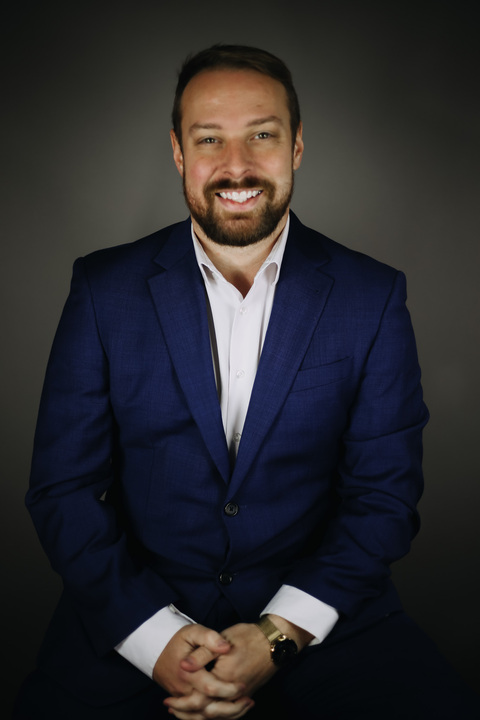

Interview with Wade Hinkle, CEO of Pharmacy Marketplace: Continuing the Legacy of Independent Pharmacy
Dispense Magazine (DM): You grew up inside an independent pharmacy, watching your father run his business. How did that experience shape your understanding of what pharmacy ownership really means?
Wade Hinkle (WH): I got a front-row seat to both the pain and the purpose of independent pharmacy. I saw my dad deal with the stress of staffing issues, tight margins, PBM games, and everything in between. But I also saw something powerful: the personal connections he built with our community.
I remember walking with him to the courthouse to get my driver’s permit. He was stopped twice by patients he knew by name, asking about their health and family members. Then the security guard called him “Doctor Bruce.” I looked at him and said, “Dad, you’re like a celebrity here,” and he just smiled and said, “Well son, I’ve been serving this community for 25 years.”
Later, a science teacher told me after class, “Your father saved my life.” I had no idea because my dad never talked about it. To him, that was just his job. That’s when I realized pharmacy isn’t just a business. These owners are healthcare heroes holding their communities together.
Choosing Pharmacy Over Finance
DM: You earned a finance degree from Auburn you could have gone in a completely different direction. What brought you back to pharmacy?
WH: Honestly, I never planned on it. I saw how hard pharmacy was for my dad. Then my brother Tanner called me during my senior year and said, “I just figured out how to save the pharmacy $50,000.”
That caught my attention. He had built a perpetual inventory system using an algorithm that determined reorder points mathematically blending finance, logistics, and pharmacy. Our McKesson rep told him, “You should do this for other stores.” So he called me and said, “Come learn this business. You can help me sell it.”
I graduated from Auburn, joined him, and within a month we landed our first client. We found $30,000 in excess stock in a pharmacy run by one of the smartest owners we knew. That’s when we realized inventory inefficiency was everywhere.
The Independent Mindset
DM: You often use the phrase “community pharmacy” rather than “independent pharmacy.” Why does that distinction matter?
WH: Because this business is personal. “Independent” describes the ownership structure, but “community” describes the heart. These owners are local healthcare leaders. They fill prescriptions, but they also fill a void especially in small towns. They know their patients’ stories, their struggles, and their health journeys.
The Birth of Inventory IQ
DM: Before Pharmacy Marketplace, you and your brother co-founded Inventory IQ. What problem were you trying to solve?
WH: Cash flow. Pharmacies were tying up too much money in overstock because they were reacting instead of forecasting. It’s what I call the “bullwhip effect.” A single backorder or patient complaint causes you to over-order next time.
We built Inventory IQ to streamline ordering and calculate optimal stock levels automatically. Over time, I learned that every pharmacy shares the same challenges but each solves them differently. You can have two stores across the street from each other running entirely different systems, wholesalers, and buying groups. That entrepreneurial spirit fascinated me.
From Inventory IQ to Pharmacy Marketplace
DM: How did that experience evolve into creating a Pharmacy Marketplace?
WH: Inventory IQ grew to 700 pharmacies nationwide, and through that, we saw firsthand how fragmented the ecosystem was. Every Pharmacy Management System (PMS) lacked a unified way to measure vendor performance or make smart purchasing decisions.
Pharmacies were missing their primary vendor rebate tiers simply because they couldn’t track progress in real time. We were guessing our way through million-dollar purchasing decisions. That’s the gap Pharmacy Marketplace was built to fill.
Why Workflow and Profit Come First
DM: Many people think of Pharmacy Marketplace as a purchasing platform, but you’ve emphasized workflow and profitability. Why that focus?
WH: Because net profit is what keeps doors open. Secondary shopping alone isn’t the full answer. When you factor in rebates, brand discounts, catalog access, and growth incentives — optimizing within your existing agreements usually wins.
Pharmacy Marketplace was built to make those complex, minute-by-minute decisions clear. If you don’t know where you stand in your rebate tiers or how close you are to the next level, you’re leaving money on the table.
Turning Data into Strategy
DM: How does your technology help owners think more strategically?
WH: Every purchase and every prescription shifts your rebate metrics. Without a tool like Pharmacy Marketplace, you’re flying blind.
We built “Athena,” our AI engine, to compare real-time secondary pricing against your rebated primary wholesaler rates. Instead of combing through emails or juggling rep calls, Athena finds only the deals that make sense for your specific usage patterns.
When we tested Athena in our own store dispensing about 200 prescriptions a day we saved over $100,000 in under three years. The process that used to take hours a day now takes minutes. That’s what technology should do: give back time and profit.
Hearing from the Underdogs
DM: What’s been the most rewarding feedback you’ve received from pharmacy owners?
WH: I’m an Auburn fan. I love an underdog. Independent pharmacies are the underdogs of healthcare.
The best feedback is when owners tell me, “This is the reason we’re still open.” Some have reported saving $2,000, $5,000, even $20,000 a month. I’ve had owners call to say, “Please don’t sell your company, we need you to fight for us.”
That hits home because I know what it feels like to fight those same battles. Seeing our technology give them breathing room in such a tight-margin industry that’s why we built this.
Tackling Financial Blind Spots
DM: In your view, what are the biggest financial blind spots for independents right now?
WH: Inventory overstock, carrying costs, primary vendor rebate mismanagement, and negative-margin prescriptions. Those four are silent killers.
Negative margins are particularly dangerous because they often go unnoticed until it’s too late. That’s why we built PBM appeal tools so pharmacies can push back and reclaim losses that were previously untouchable.
The Data Advantage
DM: You’ve mentioned that data is underutilized in pharmacy. What’s the opportunity there?
WH: Pharmacy data is a goldmine if used correctly. With the right insights, owners can reduce overstock, plan purchasing to hit rebate tiers, even forecast staffing needs.
The problem is bandwidth; most owners are too busy running the counter. That’s why automation matters. Pharmacy Marketplace exists to handle the heavy data lifting so owners can focus on patient care and strategy.
Looking Ahead
DM: What do you see for the future of community pharmacy over the next decade?
WH: The difference between those who thrive and those who struggle will come down to adaptability. The pharmacies that embrace technology that treat data, automation, and business strategy as essential are the ones that will grow.
We’re in a world where owners have to work harder to make less. But those who start working on their business instead of just in it will survive and even expand as others close.
Collaboration as the Future
DM: You’ve called for more collaboration between pharmacies, wholesalers, vendors, and tech. What does that look like in practice?
WH: Right now, it’s fragmented. The left hand doesn’t know what the right hand’s doing.
Real collaboration means integrating systems PMS, wholesalers, technology platforms so data flows seamlessly. That’s easier said than done. You have to climb corporate ladders, get lawyers and engineers involved, and wait months for approvals. But it’s worth it. The more we unite these systems, the easier and more transparent pharmacy becomes for everyone involved.
Staying Motivated
DM: Building a company in this industry isn’t easy. What keeps you pushing forward?
WH: The people, the success stories, and honestly the PBMs. Every time I see another unfair reimbursement or store closure, it fuels me.
My team hears me say it all the time: we have to move faster. Because every pharmacy we couldn’t reach in time is one that might have survived with the right tools. The harder the PBMs push, the faster I want to build.
Legacy and Vision
DM: When you think about your father’s impact and your own journey since, what legacy do you want to leave through Pharmacy Marketplace?
WH: My dad’s legacy was his community. My brother and I just expanded the definition of “community” to include every independent pharmacy owner in the country.
We’ve lived their challenges firsthand. Now we’re in a position to balance the scale. Every dollar we invest goes toward building a healthier ecosystem for pharmacies to operate in because the heroes of our communities deserve nothing less.