By Erin Albert, MBA, PharmD, JD, DASPL
Chief of Pharmacy Relations, Network and Privacy at Mark Cuban Cost Plus Drugs, PBC
12/18/25
Healthcare policy debates often center on billion-dollar budgets, national systems, and complex reimbursement structures. But as Mark Cuban reminded lawmakers in his testimony before the U.S. Senate Special Committee on Aging, the most important part of healthcare delivery happens much closer to home — within the last five feet between a patient and their pharmacist. (Testimony is at: 1:31:33 with Mark Cuban: https://www.aging.senate.gov/hearings/modernizing-health-care-how-shoppable-services-improve-outcomes-and-lower-costs.)
In that hearing, Cuban emphasized that this final interaction is where medication errors are prevented, adherence problems are uncovered, and patient trust is built. When pharmacy economics fail, he warned, that “last five feet” disappears — replaced by mail order, call centers, and fragmented care. For community and independent pharmacies planning for 2026, the Cost Plus Drugs Affiliate Pharmacy Network offers a way to protect that clinical advantage while restoring economic sustainability.
1. The “Last Five Feet” Is a Clinical Advantage — and a Business One
During the Senate hearing “Modernizing Health Care: How Shoppable Services Improve Outcomes and Lower Costs,” Cuban explained that the final interaction between pharmacist and patient may be the most consequential moment in the medication-use process. It’s where contraindications are caught, dosing confusion is resolved, and patients feel safe asking questions they would never raise with a call center.
Yet traditional PBM reimbursement models treat this interaction as a cost to be minimized. Below-cost reimbursements, retroactive fees, and unpredictable adjustments force pharmacies to reduce staffing or exit networks altogether. When that happens, patients lose access — not just convenience.
The Cost Plus Drugs Affiliate Pharmacy Network is structured around the opposite philosophy: value the pharmacist, pay transparently, and preserve in-person care.
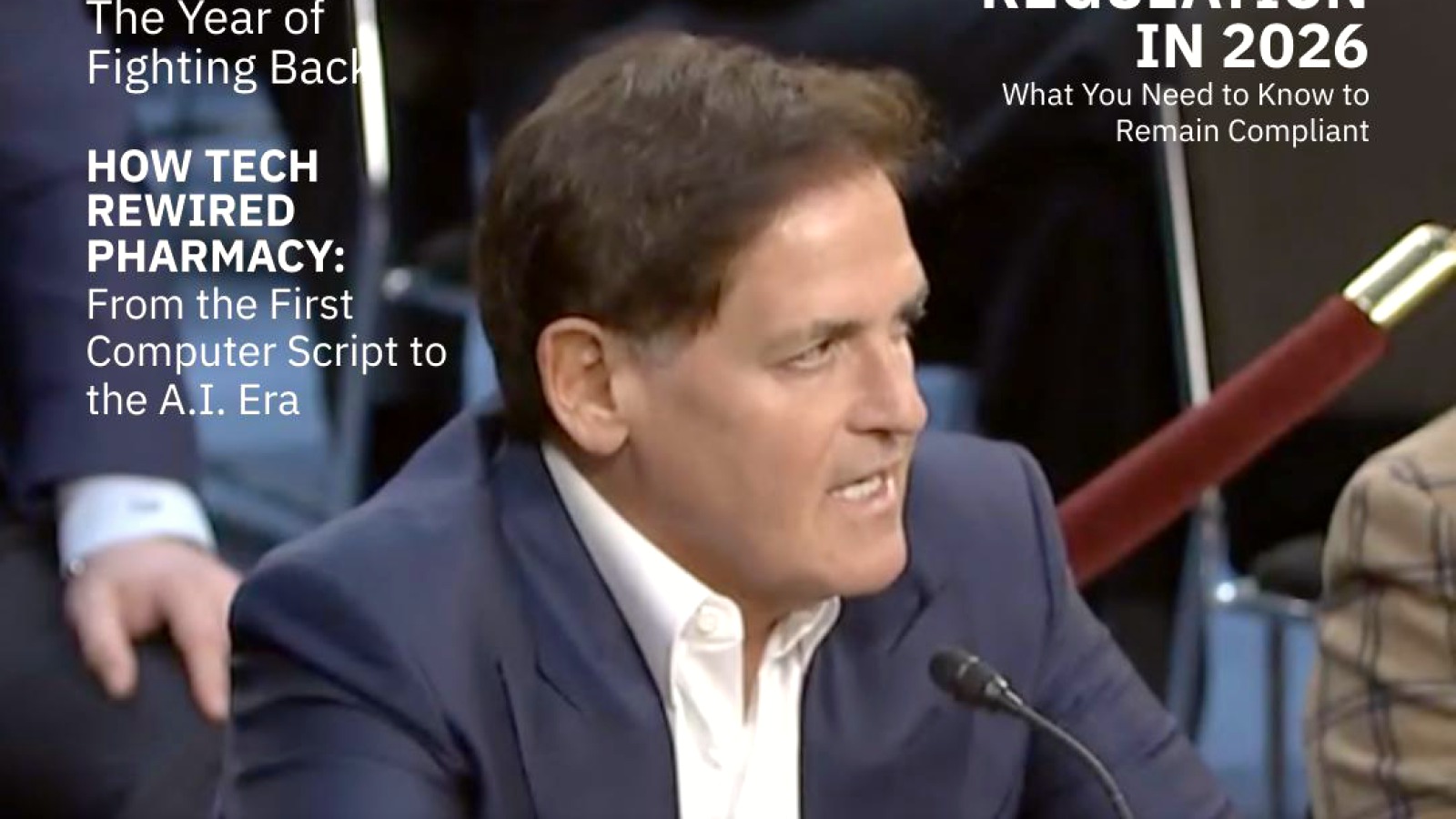
Mark Cuban, Co-Founder of Cost Plus Drugs, speaks before the U.S. Senate Special Committee. Video here.
2. Transparent Pricing and Defined Dispensing Fees
One of the most destabilizing aspects of pharmacy operations today is reimbursement uncertainty. Pharmacies often do not know their true payment until weeks after dispensing, once DIR fees, network adjustments, and reconciliation processes are complete.
The affiliate network replaces that uncertainty with clearly defined, transparent economics, including a dispensing fee structure that recognizes pharmacist labor and complexity:
- $12 baseline dispensing fee for standard prescriptions
- $14 dispensing fee for cold chain products and complex REMS medications, reflecting additional handling, storage, documentation, and clinical oversight
- $25 administrative fee for vaccines* included on the Cost Plus Drugs Affiliate Pharmacy Network Drug List, acknowledging the real operational and compliance costs of immunization services (*on the cash pay option available at www.teamcubancard.com).
This structure allows pharmacies to plan staffing, invest in services, and forecast cash flow with confidence — instead of gambling on opaque reimbursement formulas.
3. New Plan Volume Through Employer and PBM-Leased Networks
As employers and PBMs look to control drug spend without sacrificing access or safety, many are adopting alternative pharmacy networks and wrap programs aligned with transparent pricing models. Starting in 2026, more commercial and employer-funded plans are expected to lease or include Cost Plus Drugs—aligned pharmacy networks.
For participating pharmacies, this means access to new patient volume that might otherwise be directed exclusively to large chains or mail order. Importantly, these prescriptions remain in-store, preserving patient relationships and the opportunity for clinical intervention.
Joining the affiliate network positions pharmacies to participate in these arrangements rather than be bypassed by them.
4. Patient Loyalty Built on Clear, Honest Pricing
Patients are increasingly “shopping” for healthcare. Prescription prices are compared online, and frustration with unpredictable copays is growing. The Cost Plus Drugs ecosystem — including the Team Cuban Card (www.teamcubancard.com) and cost-plus messaging — gives pharmacies a straightforward, credible pricing story.
The math on the Team Cuban Card claims is in the image below. Also, note that on funded lines of business where MCCPDC pricing and the pharmacy network are leased, the pharmacies receive the Mark Cuban ingredient cost, the dispensing fee, and the 15% markup on the ingredient cost.
When patients understand what a medication costs and why, trust grows. That trust drives loyalty, adherence, and repeat visits. Pharmacies benefit not only from prescription volume, but from expanded use of services such as MTM, chronic disease support, and immunizations — all delivered within that critical five-foot space.
Team Cuban Card pricing explained on www.teamcubancard.com.
5. Smarter Operations and Access to the Cost Plus Drugs Marketplace
Operational efficiency is just as important as reimbursement. Independent pharmacies often struggle with fluctuating acquisition costs, limited buying power, and pressure to dispense drugs at a loss to satisfy plan requirements.
Affiliate pharmacies have the option to purchase medications through the Cost Plus Drugs Marketplace, acquiring select drugs at Mark Cuban Cost Plus Drugs pricing — the same transparent cost-plus model used nationwide.
This option delivers several advantages
- A reliable way to avoid negative-margin dispensing
- A transparent acquisition benchmark to evaluate wholesaler pricing
- Improved inventory planning and cash-flow predictability
- Confidence that reimbursement aligns with acquisition cost and dispensing fees
For pharmacies without massive scale, marketplace access creates a more level playing field — especially when paired with the network’s defined dispensing fees.
6. Keeping Care Local in a Mail-Order-Dominated Landscape
Mail-order pharmacies remove the pharmacist from the last 5 feet equation entirely. No counseling, no real-time safety checks, no opportunity to intervene when something doesn’t look right.
The affiliate network preserves local care by ensuring pharmacies remain the front door for medication access — even as employers and PBMs pursue lower costs. Patients receive affordable medications and professional oversight, rather than having to choose one or the other.
7. Collective Strength Without Sacrificing Independence
Independent pharmacies often negotiate alone. By joining an affiliate network, pharmacies gain collective leverage while maintaining local ownership and autonomy.
Negotiations become centered on demonstrated value — transparent pricing, adherence, safety, and access — rather than hidden spreads and retrospective fees. This strengthens the pharmacy’s position while aligning incentives across patients, employers, and payers.
Home page of www.teamcubancard.com.
8. Built-In Credibility and Reduced Marketing Burden
Explaining pharmacy pricing is hard. Being part of the Cost Plus Drugs ecosystem simplifies that conversation. Patients already recognize and trust the brand’s commitment to transparency.
Instead of defending prices, pharmacies can focus on what they’ve been trained to do…care.
Conclusion: Five Feet That Defines the Future of Pharmacy
Mark Cuban’s Senate testimony underscored a truth that pharmacists have always known: the most important work happens face to face. That last five feet between pharmacist and patient is where safety, trust, and outcomes converge.
The Cost Plus Drugs Affiliate Pharmacy Network protects that space by pairing transparent drug acquisition through the Cost Plus Drugs Marketplace with clearly defined dispensing fees — $12 baseline, $14 for cold chain and complex REMS drugs, and $25 for vaccine administration on the network drug list.
For pharmacies that want predictable margins, expanded plan access, and the ability to keep care local in 2026 and beyond, joining the network isn’t just a financial decision — it’s a strategic commitment to the future of pharmacy.
Learn more by completing this form: https://forms.gle/xVoUjPYgPFzdop7F9 or use the QR code below.
Pharmacies can apply to join the Cost Plus Drugs Affiliate Pharmacy Network here: https://forms.gle/xVoUjPYgPFzdop7F9
Dr. Erin L. Albert is a pharmacist, attorney, and the Chief of Pharmacy Relations, Network and Privacy at Mark Cuban Cost Plus Drugs, PBC. Any opinions above, however, are her own, and not necessarily those of MCCPDC. She has worked in independent, chain and community pharmacy during her career as a pharmacy intern, technician, pharmacist and pharmacist in charge.
Key Takeaways
- Transparent pricing models are forcing pharmacies to rethink acquisition cost, patient counseling, and loyalty.
- Affiliate pharmacy models may create new access opportunities when they preserve the pharmacist-patient relationship.
- The final interaction between pharmacist and patient remains a clinical and business advantage.
FAQ
Why does the final pharmacist-patient interaction matter?
It is where counseling, adherence support, safety checks, and trust often happen before a medication reaches the patient’s home.
Is this article an endorsement?
No. It is an editorial look at transparent pricing and affiliate access models pharmacy owners may want to understand.
Source Notes
Internal linking note: connect this article to relevant Dispense Times Marketplace, Magazine, Podcast, and newsletter modules as those editorial pathways are finalized.
For more practical owner/operator guidance on pharmacy growth, operations, staffing, clinical services, and profitability, visit the Independent Pharmacy Resource Center.