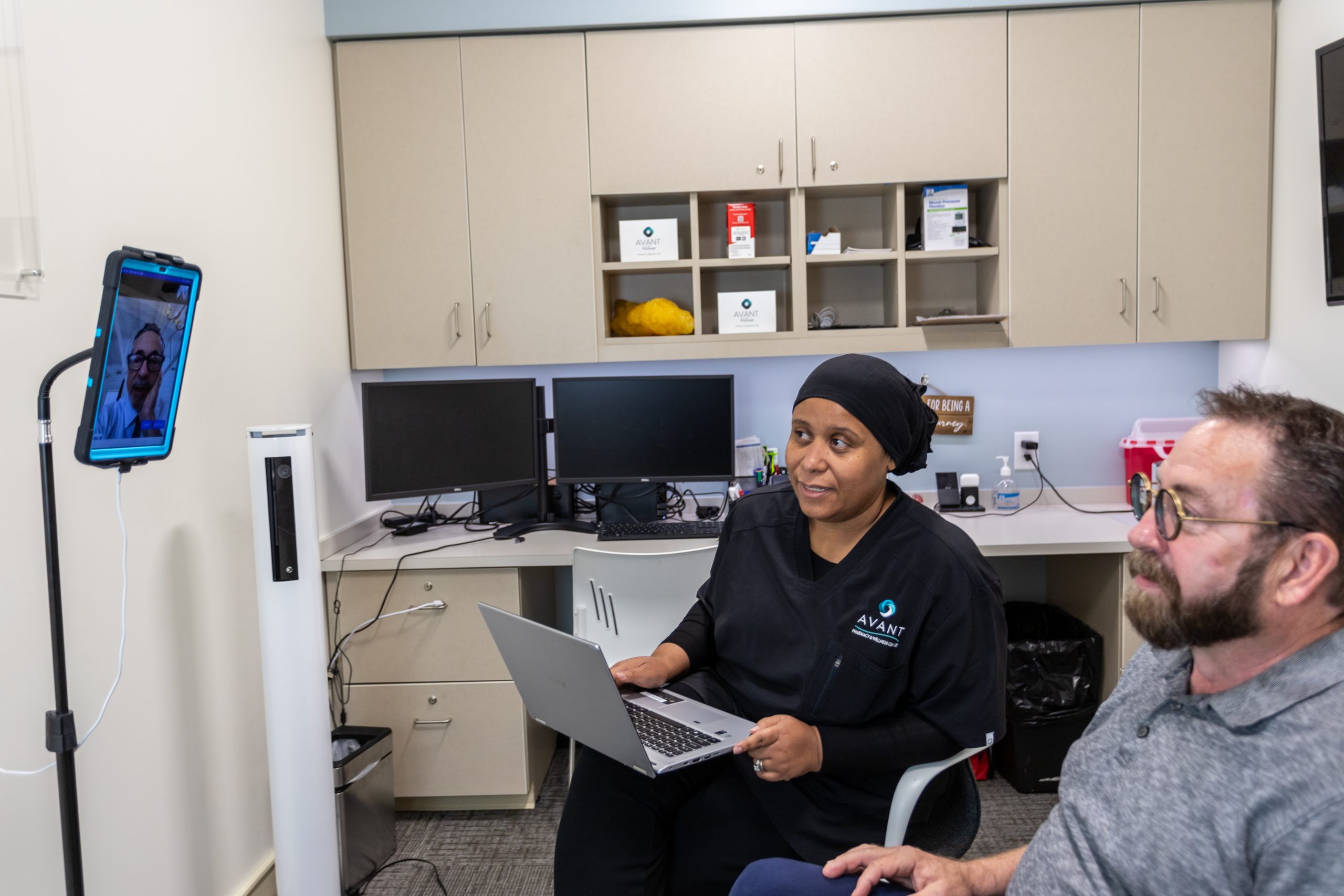

For many older adults, the community pharmacy is the most consistent point of contact in the health care system. While primary care visits may occur only a few times a year, pharmacy interactions happen monthly and often more frequently. These regular touchpoints create a powerful opportunity to address what traditional care models often miss: the emotional, social, and practical challenges that unfold between appointments.
At Avant Pharmacy and Wellness Center, community pharmacy has evolved into a true partner in behavioral health care. By working closely with primary care providers, behavioral health professionals, and community support services, Avant demonstrates what is possible when pharmacy is integrated into whole-person care for older adults, often through consistent, relationship-based phone outreach.
Importantly, this model does not replace existing pharmacy operations. It is designed to be layered onto current workflows, building on activities pharmacies already perform such as medication reviews, refill coordination, patient outreach, and care coordination.
Care Happens Between the Visits
In the United States, millions of adults over the age of 65 live with depression, anxiety, trauma-related symptoms, or substance use concerns. Loneliness and social isolation have emerged as some of the most powerful social determinants of health for this population, influencing mental health, medication adherence, health care utilization, and overall outcomes.
Yet the dominant care model remains fragmented. Older adults may see a primary care provider for 15 to 30 minutes two to four times per year. In contrast, they manage medications, side effects, financial stress, housing instability, and emotional challenges every day. Community pharmacies sit squarely in this gap.
Avant’s model is built on a simple belief: health does not happen only in exam rooms. It unfolds in homes, finances, routines, and relationships. By embedding Behavioral Health Integration into routine pharmacy workflows, Avant transforms everyday pharmacy encounters and phone calls into meaningful opportunities for support and intervention.
Patient Stories: What Integrated Care Looks Like in Practice
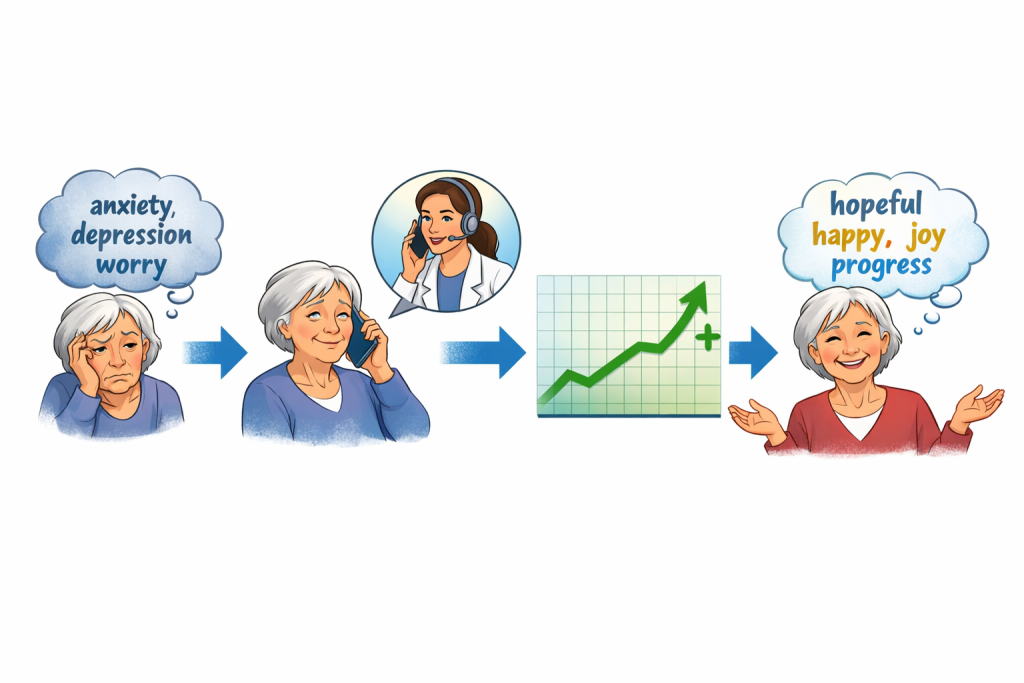
Patient A initially presented with significant anxiety driven by overwhelming financial stress related to insurance coverage and medication costs. Through coordinated Behavioral Health Integration, Avant’s pharmacy insurance advisors identified unnecessary insurance expenses and supported the patient in accessing financial assistance that reduced overall costs. The patient ultimately transitioned to a plan with no premiums and strong coverage. As financial stress eased, anxiety symptoms improved and remained stable, even during ongoing life challenges.
Patient B entered the program struggling with depressive symptoms, persistent self-doubt, inconsistent work hours, and fear of pursuing a long-held passion. Through regular phone-based check-ins, structured scheduling support, and intentional affirmations, the patient’s confidence gradually improved. Connection to ongoing therapy reinforced progress. Over time, mood scores improved steadily, personal goals felt attainable, and the patient described a renewed sense of purpose.
Patient C faced a cascade of destabilizing life events, including a spouse’s move to assisted living, housing loss due to landlord negligence, and the risk of losing beloved pets. As hopelessness emerged, a rapid, team-based response was activated involving community health integration staff, clinical pharmacists, and the primary care provider. After months of persistent advocacy, stable housing was secured for the patient, a family member, and their pets. With stability restored, the patient was enrolled in the Collaborative Care Model to continue addressing depressive symptoms and rebuild emotional balance.
Patient D presented with complex depression, anxiety, and trauma-related symptoms. After an initial period of improvement, family stressors triggered a significant emotional setback. Enrollment in psychiatric Collaborative Care allowed for deeper assessment, revealing long-standing trauma and PTSD symptoms. In collaboration with a psychiatric consultant, trauma-related insomnia was identified and addressed through medication recommendations to the primary care provider. Clinical pharmacists provided ongoing counseling during medication initiation and titration, while psychotherapy supported long-term stabilization.
These stories highlight the power of continuity, trust, and coordinated care, often delivered through consistent phone-based outreach rather than brief office visits.
Medicare Behavioral Health Integration and Collaborative Care
Codes and 2026 Estimated Reimbursement
| Model | CPT Code | Description | Estimated 2026 Medicare Payment* |
| BHI | 99484 | At least 20 minutes per month of behavioral health care coordination by clinical staff under a billing practitioner | $50–$55 per patient per month |
| CoCM | 99492 | Initial month, first 70 minutes of collaborative care management | $160–$170 |
| CoCM | 99493 | Subsequent months, first 60 minutes | $130–$140 |
| CoCM | 99494 | Each additional 30 minutes | $65–$75 |
*National Medicare averages. Final reimbursement varies by geographic adjustment and CMS rulemaking.
Important clarification for pharmacies:
Community pharmacies do not bill Medicare directly for BHI or CoCM services. Instead, they serve a critical operational role by supporting medication management, patient outreach, symptom monitoring, documentation, and communication with the billing primary care team.
Why Community Pharmacy Changes the Equation
What distinguishes Avant’s model is frequency and trust. Patients often share concerns with the pharmacy team that never surface during short clinical appointments. Pharmacists notice missed refills, changes in tone during phone calls, confusion, frustration, or withdrawal long before issues escalate into crises.
By integrating care navigation, behavioral health monitoring, and medication expertise, the pharmacy becomes a bridge between primary care and daily life. This approach reduces fragmentation, improves adherence, and addresses the emotional and social drivers of health outcomes for older adults.
This work is not limited to pharmacists alone. Pharmacy technicians and support staff can be trained to assist with outreach, scheduling, documentation support, and care coordination, allowing the clinical team to operate at the top of their license while maintaining workflow efficiency.
Building the Workforce: Training Through Avant Institute
Expanding Behavioral Health Integration and the Collaborative Care Model requires training, structure, and operational clarity.
Avant Institute serves as a dedicated education and implementation resource for community pharmacies, primary care teams, and care organizations seeking to build or expand BHI and CoCM programs. Training focuses on real-world workflows, Medicare requirements, team roles, documentation, and sustainable implementation within community settings.
Learn more or connect with the Avant Institute team:
Website: www.avantinstitute.com
Email: info@avantinstitute.com
The Future of Community Pharmacy
Community pharmacies are no longer peripheral to behavioral health care. When partnered with primary care and community services, they become essential infrastructure for supporting older adults with complex needs.
Avant Pharmacy and Wellness Center offers a living example of what is possible when pharmacy is recognized as a true partner in behavioral health care. By addressing mental health, loneliness, financial stress, and medication complexity together, community pharmacy strengthens continuity of care and improves outcomes, one phone call and one relationship at a time.
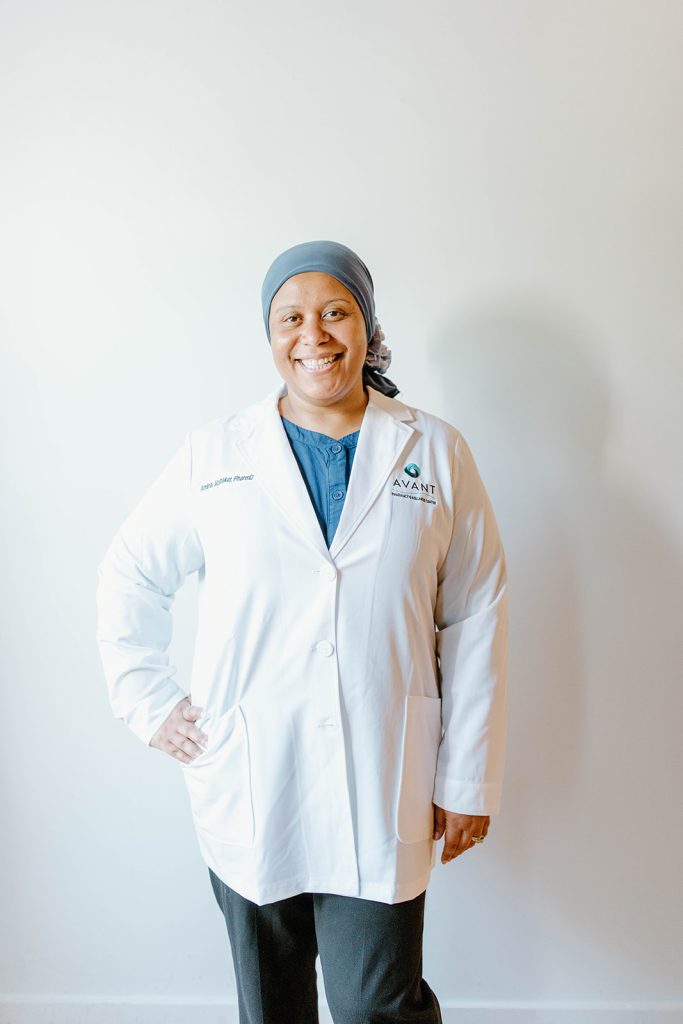
Amina Abubakar, PharmD, AAHIVP
CEO of The Avant Institute and Avant Pharmacy and Wellness
Brianna Johnson, PharmD
Director of Clinical Care Coordination Center | Clinical Community Population Health Pharmacist

Madiha Hinawy, M.Ed, LCMHCA, NCC
Behavioral Health Coordinator