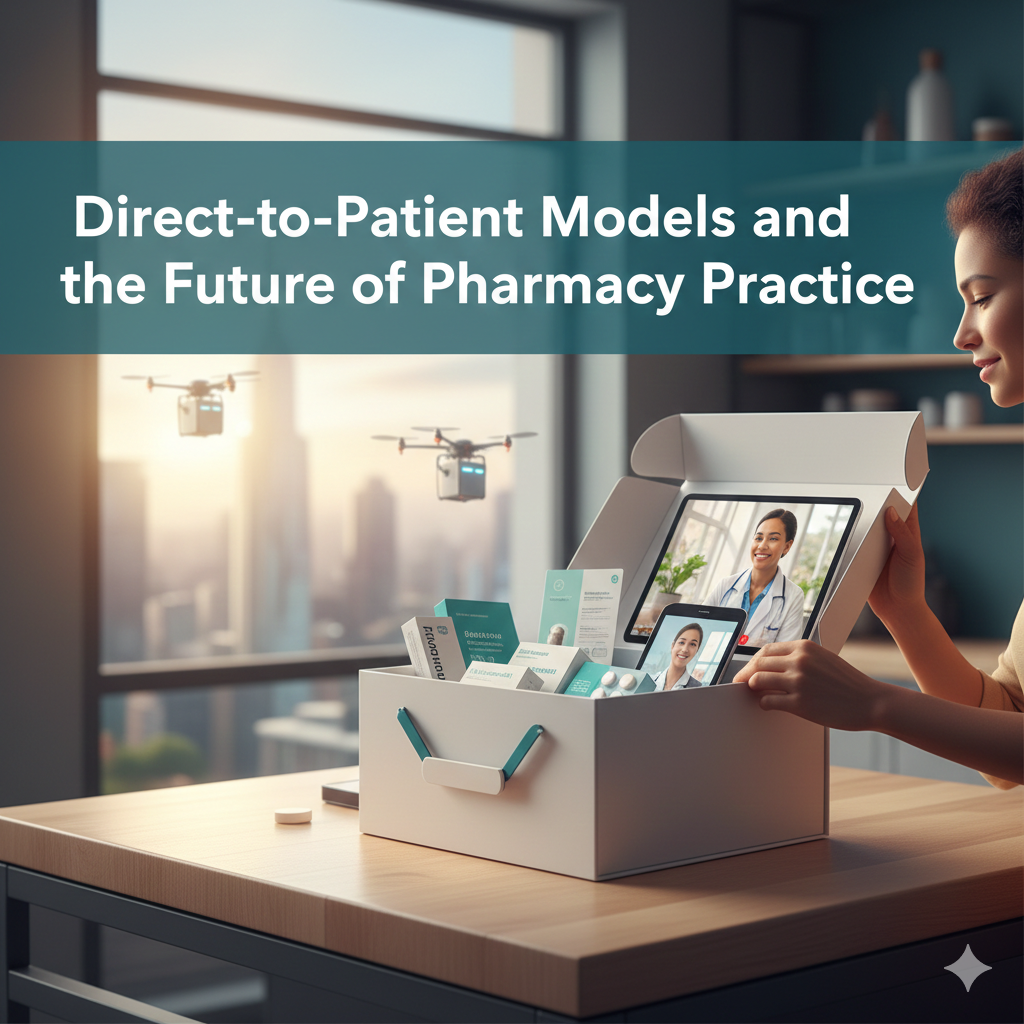

What is the Direct-to-Patient Model?
Darshan Kulkarni PharmD, MS, Esq., Principal at the Kulkarni Law Firm, PC.

Why Direct-to-Patient Is No Longer Optional
Pharmacy has always evolved when it had no choice. That moment is here again. Over the last decade, care has steadily moved away from the neighborhood counter and into the patient’s home. First came mail order , then specialty, then GLP-1 distribution at scale. Now we are watching full clinical pathways move directly to patients, with pharmacy sitting either at the center or completely off to the side.
Direct-to-patient models create the opportunity to build something pharmacy has quietly lost: a direct, ongoing relationship with the patient. They allow pharmacies to lower total cost of care, engage patients outside the transaction, and in some cases bypass traditional distributors to connect more directly with manufacturers.
Pharmacies that ignore this shift will not preserve the old model. They will instead be left trying to pick up what remains after decisions have already been made without them.
What “Direct-to-Patient” Actually Means in Practice
Direct-to-patient does not mean becoming a delivery depot with a nicer interface. At its best, it places pharmacy as a critical link between manufacturer, provider, and patient. That role includes patient education, adherence support, monitoring, and responsible data collection. It allows pharmacies to learn from patients and feed meaningful insights back to manufacturers. When pharmacists step into that role intentionally, they stop being interchangeable.
The Bagging Spectrum Explained Simply
A lot of confusion in this space comes from terminology. These models differ in who controls the drug, who touches the patient, and where accountability actually lives.
- Brown Bagging: In this format, the patient receives the drug and brings it to the site of care. Storage, handling, and timing become the patient’s problem. The pharmacist’s role is largely reduced to dispensing. Chain of custody issues multiply, and patient risk quietly increases.
- White Bagging: Here, a designated pharmacy ships the drug directly to the site of care. Controls around temperature and handling improve. Costs may come down. But patient interaction with the pharmacist remains limited. This model optimizes logistics, not care.
- Gold Bagging: In this situation, a specialty pharmacy delivers directly to the patient, often selected by the manufacturer or payer. This allows for counseling, monitoring, and scalability. Controls are tighter, but the model still centers program efficiency more than patient agency.
- Clear Bagging: Clear bagging combines elements of all three, with transparency across manufacturer, pharmacy, and provider. Digital tools, remote monitoring, and structured patient engagement are built in. When done well, it creates continuous care rather than episodic touchpoints. When done poorly, it creates surveillance without trust.
- Other Emerging Models: We are also seeing hybrids, hub-based systems, telehealth platforms tied to pharmacies, and manufacturers experimenting with tighter control. Retail pharmacies are exploring digital care models at scale for the first time. Each model raises steering, compliance, and operational questions that many organizations are not fully prepared to answer.
- Why These Models Exist at All
These models appeared since payers want to cost control, drugs are more complex, manufacturers want data, and traditional distribution models could not scale. Addin the fact that fragmented care demanded coordination and you can recognize that direct-to-patient models attempt to fill that gap. The uncomfortable truth is that the old system broke under its own weight.
- The Real Risk for Pharmacists
If implemented poorly, these models reduce six years of professional training to a logistics function. Speed becomes the metric. Throughput becomes the goal. Outcomes become secondary. Pharmacy has already pushed back against being measured by fill time instead of patient impact. Direct-to-patient models can either reverse that trend or lock it in permanently. Many pharmacists have lived this reality. It is draining. It is unrewarding. And it quietly erodes professional identity.
- The Hidden Opportunity for Forward-Looking Leaders
Large chains avoided these shifts for too long. The financial results speak for themselves since multiple chain pharmacies are shutting down. Change is happening anyway. The opportunity now is to redesign the role pharmacy plays in care delivery.
- Direct Patient Connection: Pharmacists can become the most consistent clinical touchpoint patients have. That requires real conversations, not scripted check-ins. Trust is built over time, not through dashboards.
- Value Beyond Dispensing: Therapy initiation, side-effect monitoring, escalation decisions, regimen coordination, and adherence support are not extras. They are where pharmacists can prove our value in a direct-to-patient world.
- Data as a Professional Asset: Used responsibly, data helps identify risk early and support better decisions. Used carelessly, it destroys trust and creates liability. Pharmacists should help shape how data is interpreted and applied, not simply be measured by it.
- What “Forced Pharmacists” Can Do Differently
Pharmacists will find themselves placed into these models whether they asked for it or not. That does not mean they lack agency. Understanding why a model exists, where value gaps are, and how outcomes are measured allows pharmacists to shape their role instead of inheriting it. Volunteering for patient-facing pilots, documenting outcomes, and connecting actions to real impact creates leverage. That is where new businesses, new services, and new leadership roles emerge.
Skills Pharmacy Leaders Need Now
The DTP model fills gaps in an overstretched system and explains that value clearly. Direct-to-patient models demand better communication across physicians, nurses, labs, and patients. They demand comfort with digital tools and an understanding of regulatory boundaries around tele-pharmacy and telehealth.
Where This Is All Headed
The role of pharmacy is being reassigned in real time. Care is moving into homes and clinics. Drugs will increasingly bypass traditional counters. Pharmacists can define that role or be assigned one and spend the next decade complaining about it. Those who take control will not only build sustainable businesses. They will materially improve patient lives.
Final Thought
Direct-to-patient models are an opportunity. Pharmacy has reinvented itself before. Compounding, counseling, and direct patient care used to define the profession. This is another moment where evolution is optional in theory and mandatory in practice. The question is whether pharmacy leadership will shape them thoughtfully or react after the fact.
This is exactly where experienced legal and regulatory guidance matters. The structural, compliance, and strategic decisions made now will define pharmacy’s role for the next decade. If you are navigating these models and want to get it right, this is the moment to engage the Kulkarni Law Firm.